


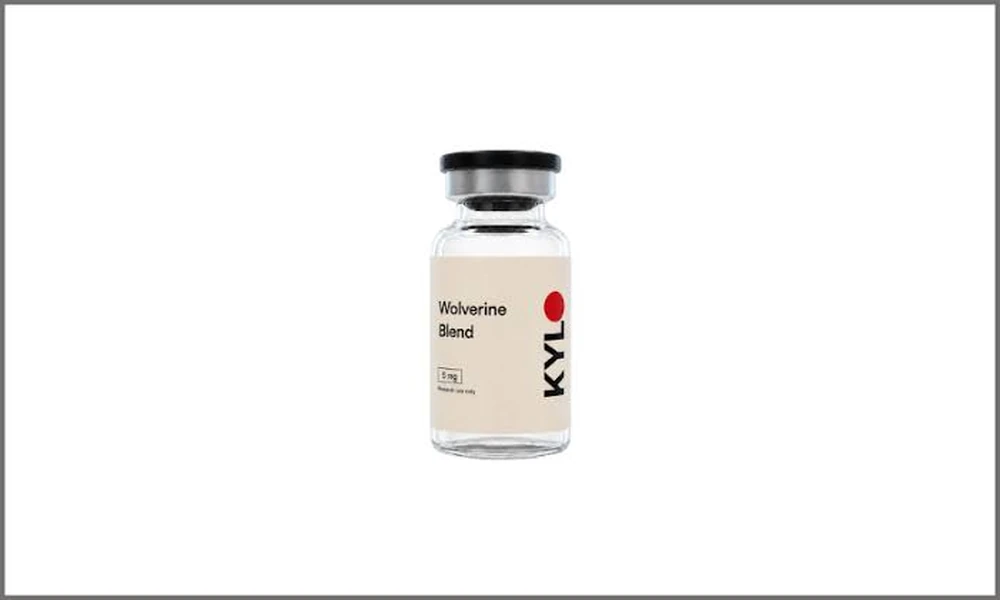
Single-peptide protocols send one repair signal. That signal travels one pathway, targets one type of tissue response, and stops. The wolverine peptide stack does not follow that structure. BPC-157 and TB-500 each act on a different biological process, and neither compound covers the ground the other does. There is a permanent presence of BPC-157 at the injury site. TB-500 moves through the body. One drives vascular repair locally. The other recruits repair cells across a wider tissue area. Running both at once means two repair processes are active simultaneously, something no single-compound protocol produces.
- Dual peptide mechanism
Growth factor signalling is how BPC-157 operates. It triggers new capillary formation at the damaged site, increases blood flow, and accelerates localised tissue repair. TB-500 takes a completely different route. Thymosin beta-4 regulation drives actin polymerisation in damaged cells and moves repair cells through the body rather than concentrating them at one point. No overlap exists between these two mechanisms. That absence of overlap is precisely why combining them adds a second repair channel rather than duplicating the first.
- BPC-157 tissue action
BPC-157 is a protein isolated from gastric juice. Preclinical studies have tested it on tendons, ligaments, muscles, and gut lining across multiple animal models. New capillary growth at the injury site is the consistent finding. More vessels mean more oxygen and more nutrients reaching the tissue that previously received a limited supply. A study conducted on rats assessing tendon-to-bone reattachment after induced injury found that those receiving BPC-157 showed structural and strength improvements compared to the control group that was not treated with the drug. BPC-157, one of the most well documented synthetic peptides used in musculoskeletal recovery research, has been tested in clinical studies for an extensive period of time.
- TB-500 cellular repair
Thymosin beta-4 occurs naturally in nearly every human cell type. TB-500 is a synthetic version built to replicate its activity in a research context. Three areas receive the most attention in TB-500 studies: inflammation reduction, repair cell migration to damaged sites, and reconstruction of muscle fibre structure. What separates TB-500 from locally acting compounds is distribution. Animal studies confirm it reaches tissue well beyond the injection site. Wound closure rates improve. Scar tissue formation decreases. Those findings hold across multiple animal model studies in the preclinical literature.
- Recovery target specificity
Localised structural repair is what BPC-157 addresses. Systemic cellular regeneration is what TB-500 addresses. A single compound running through one of those channels leaves the other untouched. Researchers comparing single-peptide and stacked protocols consistently identify dual-target coverage as the primary structural difference between the two approaches. No single peptide currently documented in recovery research activates both the localised vascular repair pathway and the systemic cellular migration pathway within the same protocol cycle.
- Protocol structure differences
BPC-157 clears the body quickly. Daily dosing is standard in animal research to keep repair signalling active at the site without gaps. TB-500 has a longer active period. A common schedule in user-reported protocols is once or twice a week, reflecting the length of time it remains systemically active after each dose, thus reflecting the frequency of its use. In order to manage two compounds that have different clearance rates, it is necessary to time each dose so that their active windows remain aligned at all times. That alignment window is where the dual-pathway effect occurs. No single-peptide protocol requires that level of scheduling complexity, and that structural difference separates the two approaches in both design and daily management.
What separates the wolverine peptide stack from every single-compound approach is timing two non-overlapping biological mechanisms to run simultaneously. BPC-157 handles localised vascular repair. TB-500 handles systemic cellular regeneration. Neither compound produces the other’s effect. Running them together within aligned active windows is what generates a recovery profile that single-peptide protocols do not replicate.
