


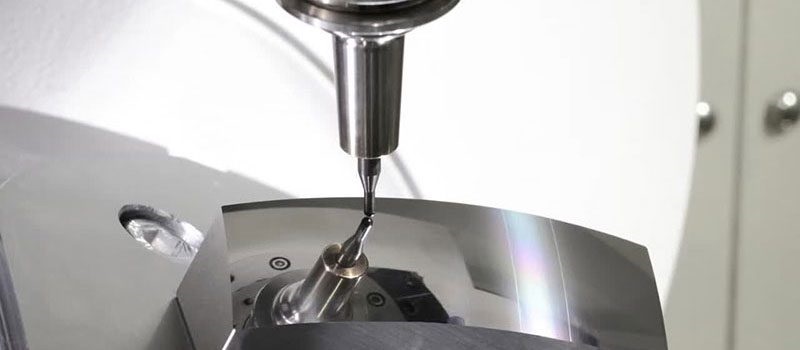
Here is a breakdown of the advantages of aluminum as a material, and how those advantages translate to CNC machining.
CNC machining seems to be a strong buzzword nowadays, what with it making the rounds all over the internet. What many of these articles fail to do, however, is properly describe what Computer Numerical Controlled (CNC) machining is, and how one can use the science to its full potential.
Basically, CNC involves carrying out tasks like cutting, grinding, molding, and boring under the instructions of a computer. Here, Instructions are keyed into a software by a trained technician and using the computer instructions as a guide, specialized CNC tools strip, bore, and cut into the selected work material until the desired result is achieved. Aluminum CNC machining is a fast, repeatable production mode that takes tasks that would be more cumbersome if it was done manually, and would waste time as well.
Fun fact: Aluminum is the material mostly employed in CNC machining, for various reasons – it is lightweight, soft, tractable, workable, and durable. It is also nonferrous and non-flammable. With a material density around 2.68, it is at the sweet spot when it comes to that metric and to boot, it has a manageable melting point around 640 degrees.
For all its positive qualities when it comes to CNC machinability, it is also important to take a look at the different grades that aluminum can take. Grade 6061 is highly weldable and has excellent mechanical properties (making it great to extrude). This means that the grade is commonly applied for 5 axis machining.
Grade 7075 is popular, but isn’t quite used as commonly as the aforementioned grade. 7075 is mostly heralded due to its high fatigue strength. But, because it is very costly, its use is reserved for tougher parts such as aerospace, consumer electronics, and automotive industry applications.
Lastly, we have grade 2024. Just like 7075, this grade is also utilized mostly in the aerospace and military. Properties such as strength, and wear resistance make it great for these applications.
There are many (often unsung) benefits to using CNC machining on aluminum. Some of these include:
- Recyclability: A very important benefit to aluminum is its great recycling potential. This is great for businesses that have a high priority of reducing their environmental footprint.
- Strength-to-weight ratio: Aluminum as a material hits a very important sweet spot: it is both lightweight as well as strong. This makes it such that it is highly workable but also, will not break apart when subjected to high pressure environments either during manufacturing or in use. This makes it extremely suitable for the manufacture of critical parts in crucial product industries such as automotive, aerospace, and heavy equipment parts manufacture.
- Corrosion resistance: As mentioned earlier in this piece, aluminum is nonferrous. This means that it will not rust or corrode. The 6061 grade, being the most commonly used grade of aluminum, is also the most corrosion resistant. This earns the metal extra durability points as it can better withstand the elements (in this case, moisture).
- High electrical conductivity: Due to its ability to conduct electricity, aluminum as a metal is excellent for manufacturing electrical parts. In its pure form, aluminum has an electrical conductivity of 37.7 million Siemens per meter (spr) at room temperature. This may place it lower than a material like copper, however, it still stands above other metals like stainless steel.
To conclude, aluminum is a metal with many unique properties that make it especially suited for CNC machining. As a general industry rule of thumb – if you can machine a part out of aluminum, it is best to use aluminum. The aforementioned benefits (as well as many more) make it so that in certain situations, there is no better material that can be used than aluminum.
